When starting an online business, most merchants make the mistake of simply choosing a platform that is easiest and most affordable, or maybe one that a friend recommended.
However, as the business grows, the platform you first chose might not be enough to meet your requirements. From technical issues to limitations on the number of customers, there can be a whole lot of problems.
In this blog, we discuss 10 such signs that shout you need to change your eCommerce platform and migrate to Shopify.
If you’re facing any of these 10 things, maybe it’s time to migrate!
A snapshot of important points in the article
-
Your platform requires constant maintenance, eating into time better spent on strategy
-
Traffic spikes cause anxiety rather than excitement due to unreliable infrastructure
-
Simple website changes require developer involvement, slowing down your marketing team
-
Platform costs are rising faster than your revenue
-
Checkout optimization is difficult, leading to high cart abandonment rates
-
Scaling internationally is complex and poorly supported
-
Third-party integrations are fragile and frequently break
-
Launching new features takes too long, causing you to miss market opportunities
-
Your store's performance depends too heavily on a small team of technical experts
-
Your platform feels like a barrier to growth rather than an enabler of it
10 signs it’s time to migrate to Shopify
Is your site constantly facing speed slowdown? Are your website bills increasing more than your revenue? To ensure your eCommerce platform is supporting the growing needs of your business, it’s important to constantly keep an eye out for signs and signals to recognize if it’s best for you to migrate to another platform. Here are 10 signs you should look out for.
1. Your platform needs constant maintenance to stay stable
Running an online business involves strategic tasks related to customers, products, marketing, and growth. But if your eCommerce platform requires a lot of maintenance, you might not be left with bandwidth for strategic matters.
For example, if your team is always worried about managing updates, troubleshooting plugin conflicts, coordinating with hosting providers, or addressing security matters, you could end up spending a significant amount of time and resources on these tasks instead on important strategies. It’s a sign that your website foundation is not efficient enough.
2. Traffic spikes make your nervous instead of excited
New product launches, seasonal sales, and promotions are exciting periods as they increase revenue and enhance brand positioning. But for some merchants this can be a cause of anxiety. For instance, if you’re worried about whether or not your website will be able to manage traffic or crash, you’re probably not equipped with the right infrastructure.
If you notice any of these signs, it’s time to migrate to Shopify: You’re planning server capacity much in advance, you’re scheduling load testing on your site, or you’re briefing your team on contingency plans for downtime.

3. Simple changes require developer involvement
The world of marketing and promotions requires fast action. Delays can mean loss of revenue. When your marketing team wants to experiment with a new banner, update product information on the website, launch a new campaign, etc., they should be able to do it quickly.
But if the marketing team has to depend on the development team, requiring opening tickets, waiting in queues, their work gets delayed. Your eCommerce system is creating slow flows, which can negatively impact your performance. The best eCommerce platforms enable non-technical teams to make changes, edits, without having to rely on development teams.
4. Your total cost of ownership keeps increasing
Running a website smoothly does have costs attached to it. However, if you’re constantly having to pay unexpected bills, and not seeing proportional revenue increase, there’s a problem. Your platform expenses should increase but only with revenue.
For instance, things that are increasing your platform costs could be: cost of delayed projects/campaigns, extra costs incurred because of platform limitations, costs related to constant security threats, etc. If you notice these costs are increasing faster than your revenue, it’s time to migrate to Shopify.
5. Checkout performance is limiting conversions
Checkout is the most critical part of the customer purchase journey. 70% of online customers abandon their shopping carts.
Here are some signs you’re losing conversions: your eCommerce platform makes checkout optimization difficult, your website performance varies across devices or regions, or you’re not able to test improvements. These issues might not appear in your analytics reports. And you won’t even know why you’re losing conversions.
Optimizing your checkout flow should be easy. If it’s complex and technically difficult, you won’t be able to make any small or simple change, and this will impact your conversions. If you’re seeing too many cart abandonments, it could be your checkout, and time to migrate to Shopify.

6. Your store is hard to scale internationally
For eCommerce stores, one of the growth opportunities is scaling internationally — entering new markets, regions, and accessing new customers. And for your eCommerce platform, this might mean incorporating more plugins, setting up complex currency and tax calculation systems, managing separate domain setups, or creating customized localization solutions.
If your platform does not support the requirements for international growth, maybe it’s time to move to Shopify’s platform. Your platform should be designed to handle multi-currency and multi-language, region-specific requirements with ease.
7. Integrations feel fragile and hard to maintain
Ecommerce businesses that want to grow and scale need to integrate tools and systems, such as ERP, CRM, order management system, email messaging system, analytics tools, etc. These integrations help streamline operations. But if these integrations don’t function properly, maybe the need is to change your platform.
For instance, if there are frequent breaks in any of these systems, if data sync becomes unreliable, when upgrades risk disrupting critical workflows, or when you need constant monitoring to keep systems in sync, it’s time to find a platform that makes operations easy, not hard.
8. Launching new features takes too long
The eCommerce world is advancing with new tools and features. Customers expect their favorite brands to provide a modern, digital experience. And hence, brands have to keep up with the new trends.
But if your platform takes too long to incorporate new features, if simple requests require extensive work, and testing cycles are too long, your platform may be slowing your progress.
Customers expect new features to be added instantly, and hence speed matters. If your platform is slow, you might miss out on opportunities. That is an indication for you to consider migrating to Shopify.
9. Performance and reliability depend on your tech team
While all eCommerce stores require technical experts and developers to help manage the store, if every small change depends on the tech team, it can be a problem. For instance, if your store requires constant vigilance, and if only a few or specific experts know how to do it, you could be in trouble.
You need to build operational resilience. And one way to do so is to choose an eCommerce platform that is stable and manageable without advanced expertise. If your current platform requires the intervention of tech experts even for small tasks, it’s time to shift to Shopify.
10. Your platform feels like a bottleneck to growth
One of the signs to notice is if your eCommerce platform is making it difficult to grow your business. For instance, if you find team complaining about the limitations of the platform or what you’re not able to achieve because of the platform, it’s better to change to a platform that can support your growth.
Your eCommerce platform and technology is meant to support your growth, not curb it. These technical issues are strategic issues, and hence, the right thing to do is to migrate to Shopify.
Do you need to migrate to Shopify?
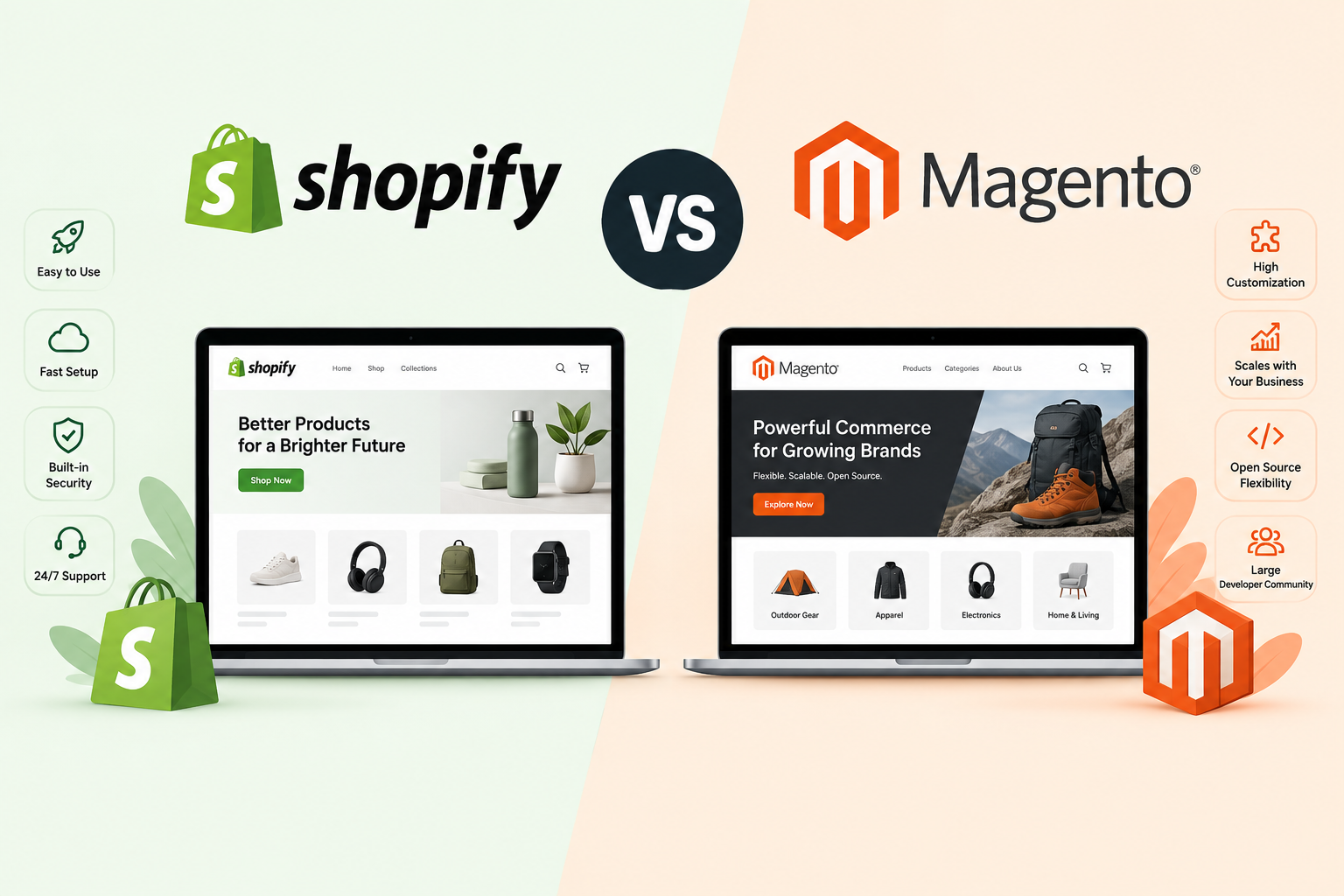
Whether you’re on WooCommerce, Magento, or any other eCommerce platform, if you’re noticing any of the above signs or you feel the need to migrate to a better platform, maybe you definitely need to migrate.
Recognizing the need to migrate is the first step. The second step is understanding how to migrate, and what it involves.
XgenTech Shopify experts help you understand whether or not you need to migrate. We audit your current eCommerce platform to help you make informed decisions. From the technical set up to business requirements to operational limitations, we consider every factor to understand whether your business needs to migrate to Shopify platform.
XgenTech Shopify experts have experience and expertise in working with eCommerce brands across industries. We have helped businesses on various platforms successfully migrate to Shopify keeping in mind their business goals.
Contact XgenTech to schedule a platform audit and migration assessment for your store.