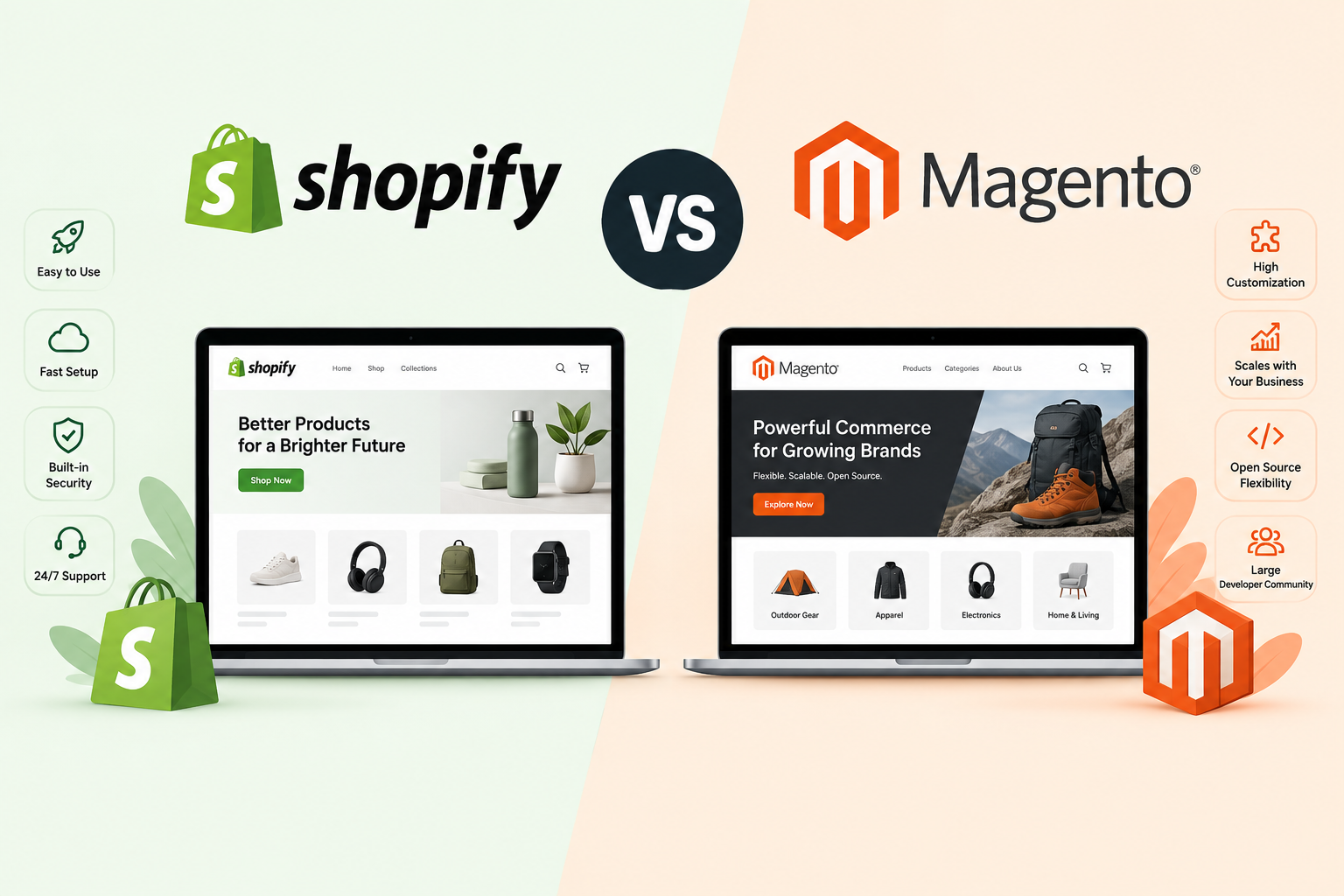
Migrating to Shopify Plus follows the same core stages for any enterprise brand - audit, data migration, configuration, testing, launch but multi-country operations add a layer most generic migration guides skip: currency, localization, and cross-border fulfillment. This guide walks through how global ecommerce brands migrate multi-country operations to Shopify Plus, the challenges that come up along the way, and what to expect from a Shopify Plus migration agency at each stage.
Serving customers across multiple countries is a major milestone for any ecommerce business. It signals growth, market demand, and the ability to scale beyond a single region. But as international operations expand, so does operational complexity.
Running one storefront across a dozen currencies is hard enough without fighting your platform. Our Shopify migration services are built for exactly this kind of complexity - centralizing global operations onto Shopify Plus without losing the local experience each market needs.
Managing multiple currencies, localized storefronts, inventory across regions, country-specific regulations, and varying customer expectations can quickly become difficult when operating on systems that were not designed for global growth.
This is one of the key reasons many multi-country ecommerce businesses eventually migrate to Shopify Plus. In this guide, we'll explore the challenges global ecommerce brands face, why they choose Shopify Plus, and how to approach a successful Shopify migration.
Common Challenges of Multi-Country Ecommerce Operations
Here are some of the challenges we see businesses face before migrating to Shopify Plus:
1. Managing Multiple Currencies and Pricing Structures
One of the biggest challenges for international ecommerce businesses is maintaining accurate and localized pricing across different markets.
Many brands end up relying on custom workarounds, separate storefronts, or third-party tools to manage currency conversions and regional pricing strategies. Over time, these solutions become difficult to maintain and can create inconsistencies in customer experience.
As the number of markets increases, pricing management often becomes a significant operational burden.
2. Delivering Localized Customer Experiences
Customers expect ecommerce experiences that feel native to their region. This includes:
-
Local currencies
-
Local languages
-
Country-specific promotions
-
Relevant product availability
-
Familiar payment methods
Businesses operating across multiple countries often struggle to deliver these experiences consistently, especially when their ecommerce platform was originally designed for a single market.
3. Inventory Visibility Across Regions
As businesses expand globally, inventory management becomes increasingly complex. Inventory may be spread across:
-
Multiple warehouses
-
Regional distribution centers
-
Third-party logistics partners
-
Different fulfillment networks
Without centralized visibility, businesses can face overselling, stock imbalances, fulfillment delays, and poor customer experiences.
4. Increasing Operational Complexity
Every new country introduces additional operational requirements. Teams must manage:
-
Local tax regulations
-
Shipping providers
-
Returns processes
-
Regional promotions
-
Market-specific customer support
As international operations grow, fragmented systems can make it difficult to maintain operational efficiency and consistency across markets.
5. Reporting and Decision-Making Become More Difficult
Leadership teams need visibility into performance across all markets. However, when international operations are managed through multiple disconnected systems, reporting often becomes fragmented. Businesses struggle to understand:
-
Market-level performance
-
Regional profitability
-
Inventory trends
-
Customer behavior
-
Marketing effectiveness
This makes strategic decision-making significantly harder as global operations scale.
Facing these challenges already? Get a free migration readiness check
Why Ecommerce Businesses With Multi-Country Operations Move to Shopify Plus
Here are some of the reasons leading eCommerce brands with multi-country operations are moving to Shopify Plus:
1. Centralized Management of Global Operations
One of the biggest reasons global ecommerce brands choose Shopify Plus is the ability to manage multiple markets from a centralized platform.
Instead of operating disconnected storefronts and systems, businesses can streamline administration, maintain consistency, and improve visibility across regions while still delivering localized customer experiences. This simplifies both day-to-day operations and long-term scalability.
2. Better Support for International Selling
Shopify Plus provides capabilities that help businesses serve global markets more efficiently. This includes support for:
-
Multiple currencies
-
Localized storefront experiences
-
Market-specific pricing
-
International domains
-
Regional customer experiences
For brands operating across several countries, these capabilities help reduce complexity while improving customer experience.
3. Faster Expansion Into New Markets
Global brands need the ability to enter new markets quickly. Many businesses migrate because their existing platforms make international expansion slow, expensive, or overly dependent on custom development.
Shopify Plus provides a scalable framework that enables businesses to launch new regional experiences faster while maintaining operational consistency.
4. Improved Operational Efficiency
As international operations grow, operational efficiency becomes increasingly important. Shopify Plus helps businesses reduce platform maintenance, simplify workflows, and improve integration management across systems such as:
-
ERP platforms
-
CRM systems
-
OMS solutions
-
Inventory management platforms
-
Logistics providers
This allows teams to focus more on growth rather than operational complexity.
5. Stronger Foundation for Long-Term Global Growth
Many businesses move to Shopify Plus because they need a platform that can support future expansion. Whether adding new countries, launching new product lines, or entering entirely new regions, Shopify Plus provides a flexible infrastructure designed to scale alongside the business.
This future-readiness is often a major factor in migration decisions.
How to Migrate Multi-Country Ecommerce Operations to Shopify Plus
Here’s a step-by-step our Shopify Plus migration experts follow:
Step 1: Audit Existing International Operations
Before migration begins, businesses should conduct a comprehensive audit of all international operations. This includes:
-
Storefront structures
-
Country-specific workflows
-
Inventory systems
-
Fulfillment processes
-
Tax configurations
-
Payment methods
-
Customer support operations
The objective is to identify dependencies and opportunities for optimization before migration planning begins.
Step 2: Define Global Commerce Architecture
Not every market requires the same structure. During this stage, businesses determine:
-
Market hierarchy
-
Regional storefront requirements
-
Localization strategies
-
Currency management
-
Customer segmentation
-
Expansion plans
This framework becomes the foundation for migration planning.
Step 3: Consolidate and Clean Data
International ecommerce operations often accumulate large volumes of fragmented data. Before migration, businesses should review and clean:
-
Regional inventory information
-
Order history
-
Market-specific content
Clean data significantly improves migration accuracy and operational efficiency after launch.
Step 4: Map Inventory, Fulfillment, and Operational Workflows
Multi-country operations depend on highly coordinated backend systems. This step focuses on mapping:
-
Inventory synchronization
-
Fulfillment routing
-
Warehouse operations
-
Shipping providers
-
ERP integrations
-
Customer support workflows
Proper workflow mapping helps maintain business continuity during and after migration.
Step 5: Configure Shopify Plus Markets and Storefronts
Once the migration architecture is finalized, Shopify Plus environments are configured. This includes:
-
Country-specific storefront experiences
-
Localization settings
-
Currency configuration
-
Regional domains
-
Market-specific product availability
-
Payment and shipping settings
The goal is to create localized experiences without introducing unnecessary operational complexity.
Step 6: Perform Extensive Testing Across Markets
Testing is especially important for multi-country migrations because every market may have unique requirements. Teams should validate:
-
Currency functionality
-
Regional pricing
-
Checkout experiences
-
Payment methods
-
Inventory synchronization
-
Tax calculations
-
Fulfillment workflows
This helps identify issues before customers encounter them.
Step 7: Launch, Monitor, and Optimize
Migration does not end at launch. Following go-live, businesses should closely monitor:
-
Regional sales performance
-
Inventory accuracy
-
Fulfillment operations
-
Customer support workflows
-
Conversion rates
-
Localization effectiveness
This allows teams to address issues quickly and continue optimizing global operations.
Conclusion
Migrating a multi-country ecommerce business requires significantly more planning than a standard ecommerce migration. Multiple markets, currencies, operational workflows, fulfillment networks, and customer experiences must all be carefully coordinated to ensure a successful transition.
The good news is that when executed properly, migration can simplify global operations, improve scalability, reduce complexity, and create a stronger foundation for international growth.
At XgenTech, we help ecommerce brands migrate complex multi-country operations to Shopify Plus while protecting business continuity, operational efficiency, and customer experience. From strategy and architecture planning to implementation and post-launch optimization, our team manages every stage of the migration journey.
If you're planning a global ecommerce migration and want a partner who understands the complexities of international operations, get in touch with our team today.